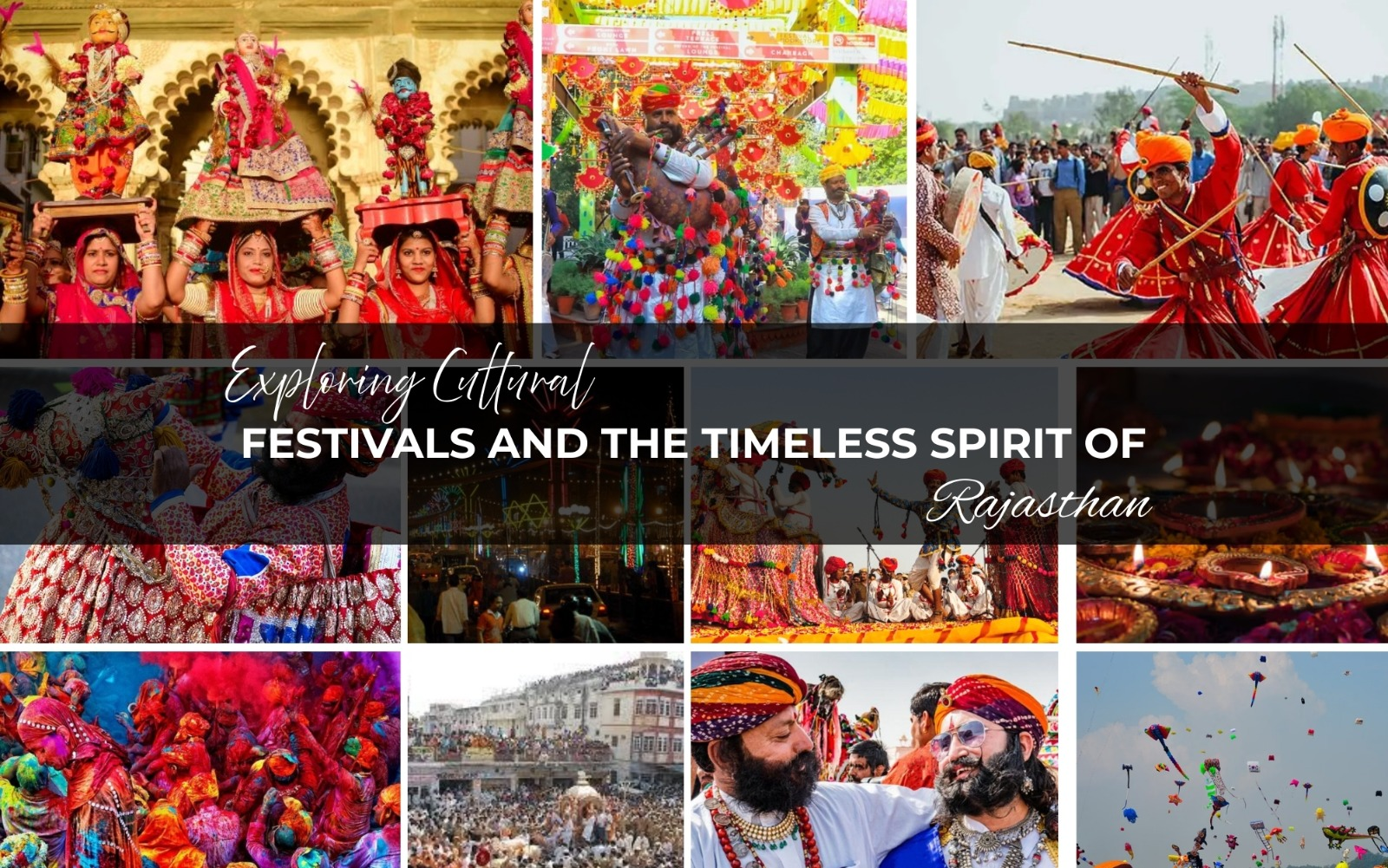
Exploring Cultural Festivals and the Timeless Spirit of Rajasthan
Rajasthan is a state that manifests its culture in a multitude of ways: visually through its architecture and arts, audibly through its music and dancing, and importantly, physically through the people of Rajasthan. Festivals in Rajasthan are not simply a performance created for visitors to enjoy; rather, they have been developed through the natural resources inherent in the environment of Rajasthan, centuries of historical experience, geographic location, and the everyday lives of the inhabitants of Rajasthan. Festival participation provides valuable insights into how individuals living in a harsh climate adapt, continue to maintain their identities, and, through daily, weekly, and yearly rituals, mark the changes of seasons and years of their existence.
This article will examine the variety of cultural festivals celebrated in Rajasthan, the relationship of these festivals to the sociocultural environment of Rajasthan, and how the festivals together convey the spirit of Rajasthan. The spirit of Rajasthan is characterized by no romantic notions of culture but rather by resilience, continuity, and community involvement.
Understanding the Spirit of Rajasthan
Rajasthan has been shaped by geography as well as the history of the region. Harsh desert terrain, repeated invasions, clan warfare, and royal patronage have all developed a culture in Rajasthan where people place great importance on honor and celebration as a means of creating a sense of belonging and unity of purpose within their communities.
In places where resources are limited, celebrating anything becomes necessary for survival. In places where hardships are part of everyday life, celebrations are expressed in the form of music, dance, color, ritual, etc. Today's traditional festivals in Rajasthan are observed with respect for both their origins and for what they represent.
The spirit of Rajasthan is:
- Community-driven, not individualistic
- Ritual-focused, not commercial at its core
- Loud, colorful, and unapologetically expressive
- Rooted in oral traditions, folk arts, and seasonal cycles
Festivals act as checkpoints in the year, marking harvests, monsoons, victories, deities, and social bonds.
Pushkar Camel Fair: Economy, Faith, and Community
TAlthough many describe Pushkar Camel Fair as colorful, the real significance of the fair lies in its role as one of India’s largest livestock trade fairs. During this large event, a vast amount of commerce (buying/selling of tens of thousands of camels, Cattle & Horses) also takes place, along with many pilgrims coming together to Pushkar Lake for ritual bathing since they believe that doing so will provide them with spiritual benefits.
Combining these two purposes (economic survival and religious obligation), Pushkar is considered one of the most popular festivals of Rajasthan since the fair highlights how festivals serve an essential purpose as part of the Festival Infrastructure rather than merely providing enjoyment.
Desert Festival, Jaisalmer: Survival Celebrated Through Art
The Desert Festival of Jaisalmer is based on what is necessary to live in the Thar Desert. Events such as competitions for music makers, turban tying competitions, camel racing, and folk music shows do not just happen; they are all a representation of survival and cultural pride. The Desert Festival celebrates people who persevere in the face of so much hardship and limited resources, with the use of traditional costumes that are suitable for their environment and not just decorative items.
As part of the broader cultural festivals of Rajasthan, the Desert Festival highlights how art and tradition evolve from necessity rather than luxury.
Gangaur Festival: Women, Faith, and Social Structure
The festival of Gangaur is one of Rajasthan's largest annual events, particularly celebrated by women. Goddess Gauri is the deity for this festival and represents Devotion to one's husband, fertility, and prosperity in the home. Unmarried women pray to Herself for the partner of their choice, and the other married women seek a stable home for their family. During this festival, idols of the goddess are carried in local processions through the villages and cities, while folk songs are often sung in a style that has been orally passed from one generation to the next.
This is important for Gangaur not only because it is an attractive display visually, but also because it highlights the gender perspectives, social roles, and family structures found throughout Rajasthan.
Teej Festival: Seasonal Change and Agricultural Rhythm
Teej coincides with the monsoon, marking relief from intense summer heat. Celebrated mainly by women, it reflects joy tied to rainfall, fertility, and renewal. Swings hung from trees, folk songs, and fasting rituals are part of the celebration. Teej reinforces the link between nature and survival—rain determines crops, livestock health, and economic stability.
Among the famous festivals of Rajasthan, Teej stands out for its connection to seasonal reality rather than spectacle.
Marwar Festival: Honoring Folk Heroes and Oral History
The Marwar Festival in Jodhpur commemorates folk heroes and historical warriors through music and storytelling. Ballads recount battles, loyalty, and sacrifice. Unlike scripted performances, these narratives are often improvised, keeping oral history alive. Instruments like the ravanhatta and dholak accompany songs that are centuries old.
This festival directly reflects the spirit of Rajasthan—a strong sense of honor, memory, and resilience shaped by conflict and survival.
Elephant Festival: Symbolism and Royal Legacy
The Jaipur Elephant Festival honors the past use of elephants in military and ceremonial roles. The decorated elephants featured in the events participate in both the parading and performance aspects of the festivities. Many of today’s activities stress the visual aspect of the spectacle; however, the roots of the festival are based on the importance of showcasing the power and prestige of the royal lineage. Elephants were traditionally associated with both symbolism and power in the long-standing history of Rajasthan.
At the same time, it raises an ethical concern about changing cultural values and how cultural traditions have changed over time. The dialogue between heritage preservation and the responsibility that all today’s communities have to preserve their cultural heritage continues into the future of Rajasthan.
Kite Festival: Community Over Competition
Held during Makar Sankranti, the Kite Festival transforms Jaipur’s skyline. Rooftops become gathering points, and families participate collectively. Though competitive kite-flying exists, the festival’s core lies in communal participation. Seasonal change, agricultural transition, and social bonding are central themes.
Among the best cultural experiences in Rajasthan, this festival offers insight into everyday life rather than ceremonial grandeur.
Dussehra in Kota: Strength Over Ornamentation
Kota has a distinct way of celebrating the festival of Dussehra: much less in terms of clothing and much more in terms of martial arts and burning large amounts of firewood and effigies. This demonstrates the long-standing historical significance the city has had in terms of military power and a rational approach to cultural activities. Festivals are often seen to adapt to current circumstances based on local histories or cultural ideals.
When studying Rajasthan's numerous cultural celebrations associated with festivals, regional differences are extremely important.
Cultural experience: Discover the local temples, ghats, and ruins while making a historical route.
Traditional Festivals in Rajasthan: Faith, Family, and Function
What sets traditional festivals in Rajasthan apart is their functional relevance. They are not abstract celebrations but responses to real conditions.
- Makar Sankranti marks agricultural transitions
- Holi celebrates social equality, where hierarchy temporarily dissolves
- Diwali blends economic cycles with spiritual renewal
Even smaller village-level festivals hold importance. They regulate social interaction, reinforce moral codes, and pass down oral histories.
Best Cultural Experiences in Rajasthan: Beyond Tourist Circuits
The best cultural experiences in Rajasthan are not found solely in brochures or luxury resorts. They occur when visitors engage with festivals authentically. Exploring cultural festivals of Rajasthan responsibly means observing before participating and learning before documenting.
Examples include:
- Participating in local processions
- Observing rituals with respect
- Traveling between towns during festival seasons
- Attending folk performances in open village settings
Timing travel around festivals allows deeper cultural access. However, logistics matter. Rajasthan’s distances are vast, and festival locations often lie outside major urban centers. This is where dependable, comfortable transport plays a role in meaningful cultural exploration.
Conclusion
Rajasthan’s festivals are not remnants of the past; they are functioning systems that continue to shape social life. They adapt without losing purpose. From livestock fairs to devotional processions, these events reflect how communities respond to environment, history, and belief. The cultural festivals of Rajasthan are practical, resilient, and deeply rooted.
For travelers seeking genuine engagement—not fantasy—understanding these festivals offers a realistic view of the timeless spirit of Rajasthan. With thoughtful planning and support from reliable services like Luxury Urbania Hire, it is possible to experience Rajasthan’s culture as it exists, not as it is marketed.
FAQs

At Luxury Urbania Hire, we are dedicated to providing top-notch Luxury Urbania Hire services in the vibrant city of Jaipur, Rajasthan.
quick Links
Services
have a questions?
P-15, RN Vihar, bindayaka jaipur, Rajasthan 302012